


Stainless Steel, an alloy revered for its strength, versatility, and resistance to corrosion, comes in various types and grades. Among the most prominent are SUS304 and SS304. While they may seem similar, subtle differences can be decisive for specific applications.
This blog delves into the nuances between SUS304 and SS304, shedding light on their respective compositions, properties, and ideal use cases. By the end, you’ll better understand which alloy best serves your needs.

SUS304 Stainless Steel
SUS304 stainless steel is a widely used grade from Japanese standards (JIS). Characterised by its austenitic structure, it primarily consists of 18% chromium and 8% nickel. This composition offers excellent corrosion resistance, making it ideal for kitchen appliances, general household items, and certain industrial applications.
Its balance between durability and workability ensures it remains a favourite for manufacturing entities and end-users. The term “SUS” stands for “Steel Use Stainless,” indicating its prominence in diverse use cases.
SS304 Stainless Steel
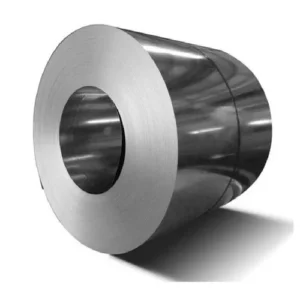
SS304, often called “304”, is an American grade under the ASTM standards. Like SUS304, it’s austenitic steel composed predominantly of 18% chromium and 8% nickel. It boasts similar corrosion-resistant properties and is commonly used in many applications, from cookware to automotive parts, architectural panels, and chemical containers.
SS304’s widespread recognition and usage can be attributed to its robust mechanical properties, ease of fabrication, and remarkable resistance to various environmental factors. The “SS” acronym represents “Stainless Steel,” denoting its broad adaptability and resilience.
Difference Between SUS304 and SS304 Stainless Steel
While SUS304 and SS304 may seem virtually identical due to their similar chemical compositions, their distinction largely arises from the standards they adhere to and their geographical associations.
Origin of Standards:
SUS304 is specified under the Japanese Industrial Standards (JIS), while SS304 aligns with the American Society for Testing and Materials (ASTM) standards. These different standardisation bodies have specific testing methods, tolerances, and quality benchmarks, which can result in minor variations in properties and performance.
Features of SUS304 & SS304
| Feature | SUS304 | SS304 |
| Designation | Japanese JIS designation for Type 304 stainless steel | Common designation for 304 stainless steel; ASTM commonly uses Type 304 |
| Standard | Specified under applicable JIS standards, such as JIS G 4305 for cold-rolled sheets and plates | Specified under applicable standards, such as ASTM A240/A240M for stainless steel plate, sheet and strip |
| Chemical Composition | Must meet the chemical composition limits of the applicable JIS specification | Must meet the chemical composition limits of the applicable ASTM or other specified standard |
| Corrosion Resistance | Generally good corrosion resistance in many atmospheric and industrial environments | Generally comparable corrosion resistance when the composition and material condition are equivalent |
| Hardness | Depends on material condition, thickness and cold working | Depends on material condition, thickness and cold working |
| Tensile Strength | Must meet the mechanical property requirements of the applicable JIS standard | Must meet the mechanical property requirements of the applicable ASTM or other specified standard |
| Thermal Conductivity | Generally similar to equivalent 304 stainless steel | Generally similar to equivalent 304 stainless steel |
| Weldability | Generally good with appropriate welding procedures and filler materials | Generally good with appropriate welding procedures and filler materials |
| Surface Finish | Available finishes depend on the product specification and manufacturer | Available finishes depend on the product specification and manufacturer |
| Price | Depends on supplier, origin, dimensions, finish, quantity and certification | Depends on supplier, origin, dimensions, finish, quantity and certification |
| Availability | Availability depends on the market, supplier and required specification | Availability depends on the market, supplier and required specification |
| Applications | Food-processing equipment, kitchenware, automotive components and industrial fabrication | Food-processing equipment, kitchenware, automotive components and industrial fabrication |
Also see our SS 304 Products at Wholesale Price
Nomenclature:
The naming convention is a direct reflection of these origins. “SUS” in SUS304 stands for “Steel Use Stainless,” a terminology frequently used in the Japanese standards. Conversely, “SS” in SS304 simply represents “Stainless Steel,” a more straightforward indication of its material type in the American context.
Application and Recognition:
SS304, being from the ASTM standard, is more widely recognized and used in the Western world, especially in the US. It’s seen in various industries, from food processing to aerospace. SUS304, on the other hand, has a more pronounced presence in Asian markets, particularly in Japanese industries and products.
Microstructural Variations:
Though both grades are austenitic with almost identical alloying elements, subtle differences might arise due to specific production processes or treatments favored by each standardisation body.
SUS304 and SS304 stand as pillars in the vast realm of stainless steel, each with unique attributes derived from different standardising origins. While they share a strikingly similar chemical composition, their subtle distinctions lie in regional standardisation, processing nuances, and prevalent market availability.
Whether you lean towards the Japanese SUS304 or the American SS304, it’s the informed choice, understanding the nuances of each, that will ensure the longevity and efficiency of your endeavours.